
What Is Farm-Based Learning?
Learning through movement, responsibility, relationships, real work, and everyday farm life.
Farm-based learning uses the working farm as an active learning environment.
At Hidden Pastures, people learn by moving, observing, caring for animals, solving problems, practicing real skills, working alongside others, making choices, and contributing to something that matters.
The farm is not simply the backdrop.
It is part of the learning.
Learning happens while something real is being done.
More Than Learning Farm Skills
Farm-based learning certainly includes practical skills.
Participants may learn how to care for animals, work safely around horses, use tools, grow food, complete projects, solve everyday farm problems, and understand where food and resources come from.
But the learning goes much deeper than the task itself.
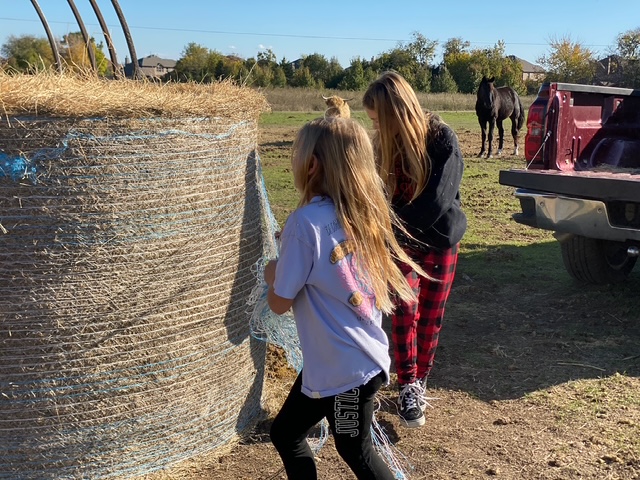
Carrying Feed
Responsibility
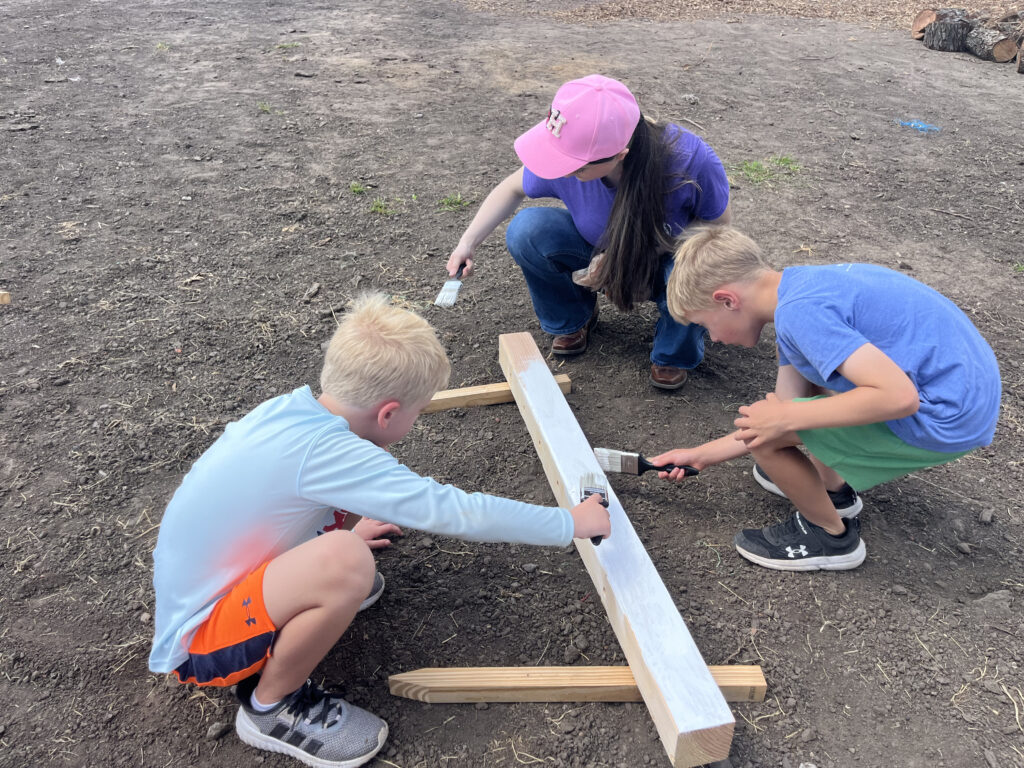
Moving Equipment Together
Communication and cooperation
Leading a Horse
Awareness, timing, boundaries, and clear communication
Trying Again
Patience, persistence, and competence through practice
The farm provides real situations where physical, cognitive, social, and practical learning happen at the same time.
Learning Involves the Whole Person
At Hidden Pastures, we do not separate the body from learning.
Movement, sensory experience, emotional safety, curiosity, relationships, problem-solving, and practical skill-building all affect how ready someone is to engage.
These activities give the body meaningful work to do while accomplishing something real.
For many people — children and adults alike — purposeful movement can make it easier to settle into an activity, focus attention, and participate. This can be especially meaningful for people who learn, communicate, move, or regulate differently.
Hidden Pastures does not provide occupational therapy or sensory-integration treatment. The farm naturally offers a movement-rich, hands-on environment where people can engage through their bodies as well as their minds.
Farm Life Naturally Includes
- ✓Walking
- ✓Lifting
- ✓Carrying
- ✓Pushing
- ✓Pulling
- ✓Digging
- ✓Grooming
- ✓Climbing
- ✓Hauling
- ✓Balancing
- ✓Using tools
- ✓Navigating uneven ground
The Farm Gives the Body Work to Do
Many farm jobs naturally involve pushing, pulling, lifting, carrying, climbing, and other whole-body work.
This kind of movement is often called proprioceptive input — information the body receives through muscles and joints during activities like these. At the farm, it happens naturally through meaningful work. Someone may:
- ✓Carry feed
- ✓Push a wheelbarrow
- ✓Groom a horse
- ✓Haul water
- ✓Move hay
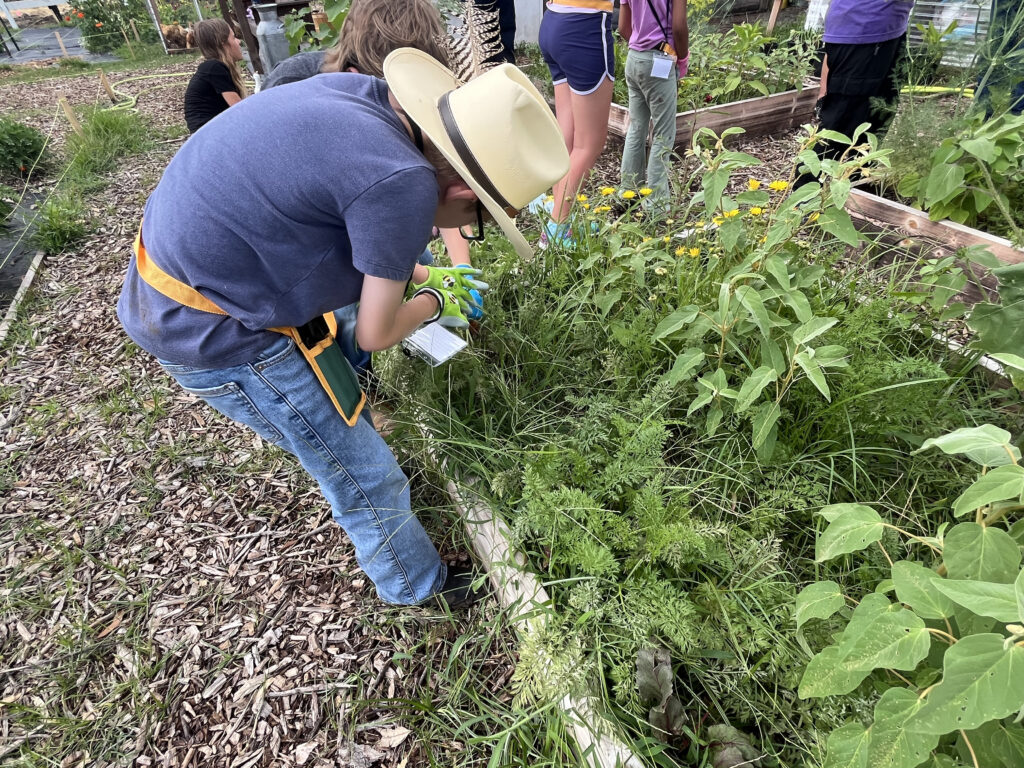
- ✓Dig in the garden
- ✓Open gates
- ✓Stack supplies
- ✓Work with tools
- ✓Complete a farm project
The goal is not to create a clinical exercise.
The goal is to participate in real farm life.
People Learn Better When They Feel Safe Enough to Try
Exploration and learning require some willingness to take a risk.
That might mean asking a question, approaching an unfamiliar animal, trying a new skill, making a mistake, speaking in a group, or admitting that you need help.
When someone feels comfortable enough to engage, there is more room for curiosity, problem-solving, communication, and learning.
Hidden Pastures Works to Create
- ✓Clear expectations
- ✓Respectful boundaries
- ✓Predictable routines where possible
- ✓Meaningful choices
- ✓Opportunities to observe before participating
- ✓Room to move
- ✓Appropriate opportunities to pause
- ✓Permission to try again
- ✓Respect for different ways of participating
People do not have to perform perfectly before they are allowed to belong.
Six Parts of Farm-Based Learning
Movement & Regulation
Farm life involves purposeful movement and rich sensory experiences.
Walking, carrying, lifting, grooming, digging, using tools, caring for animals, and moving through outdoor spaces give participants opportunities to engage physically while doing meaningful work.
For many people, that movement can support attention, participation, and readiness to engage.
Safety & Readiness to Learn
Learning is difficult when someone is overwhelmed or spending most of their energy figuring out whether they are safe, welcome, or about to be pushed beyond what they can manage.
Clear expectations, respectful boundaries, choice, and room to participate in different ways help create an environment where people can settle into the experience.
The goal is not to remove every challenge.
It is to create enough security for someone to be willing to try.
Curiosity & Exploration
A working farm changes constantly.
Animals behave differently from day to day. Weather changes plans. Plants grow. Equipment breaks. Problems need solving.
Participants are encouraged to:
- notice
- ask questions
- investigate
- try ideas
- make decisions
- solve problems
- learn from what happens
Not every question has one predetermined answer.
That makes the farm a natural environment for exploration.
Practical Skills & Competence
Confidence is not something we simply tell people to have.
It often grows when someone learns how to do something they could not do before.
Farm-based learning creates opportunities to build competence through repeated practice.
Depending on the experience, participants may learn:
- animal care
- horsemanship
- farm safety
- gardening
- tool use
- property care
- practical problem-solving
- organization
- planning
- responsibility
Skills become meaningful because they are used for real purposes.
Social Skills & Leadership
Many farm tasks require people to work alongside one another.
Participants may practice:
- communicating clearly
- listening
- taking turns
- asking for help
- helping someone else
- cooperating toward a shared goal
- taking initiative
- following through on responsibilities
Leadership at Hidden Pastures is not about being the loudest person in the group.
Leadership grows through responsibility, initiative, communication, problem-solving, dependability, and learning how to contribute well alongside others.
Purpose, Contribution & Belonging
People are not only recipients of an experience at Hidden Pastures.
They can become participants in the life of the farm.
Animals need care. Projects need completing. Gardens need tending. Equipment needs organizing. Someone may need help.
Work matters because there is a reason for doing it.
Belonging becomes stronger when people know their contribution has value.
Animals Are Part of the Learning Environment
Animals create opportunities for observation, responsibility, communication, boundaries, patience, and practical skill-building.
But Hidden Pastures animals are not props, teaching equipment, or emotional tools.
They are living beings with their own:
- needs
- preferences
- boundaries
- health considerations
- personalities
- daily routines
Participants learn not only how to interact with animals, but also when not to.
Respecting an animal’s space, noticing behavior, adjusting an approach, and accepting that an animal may not participate are all part of learning good horsemanship and animal care.
Animal wellbeing always comes first
Learning Without Needing to Sit Still
Traditional learning environments often depend heavily on sitting, listening, reading, writing, and responding verbally. Those skills are valuable — they are simply not the only ways people learn.
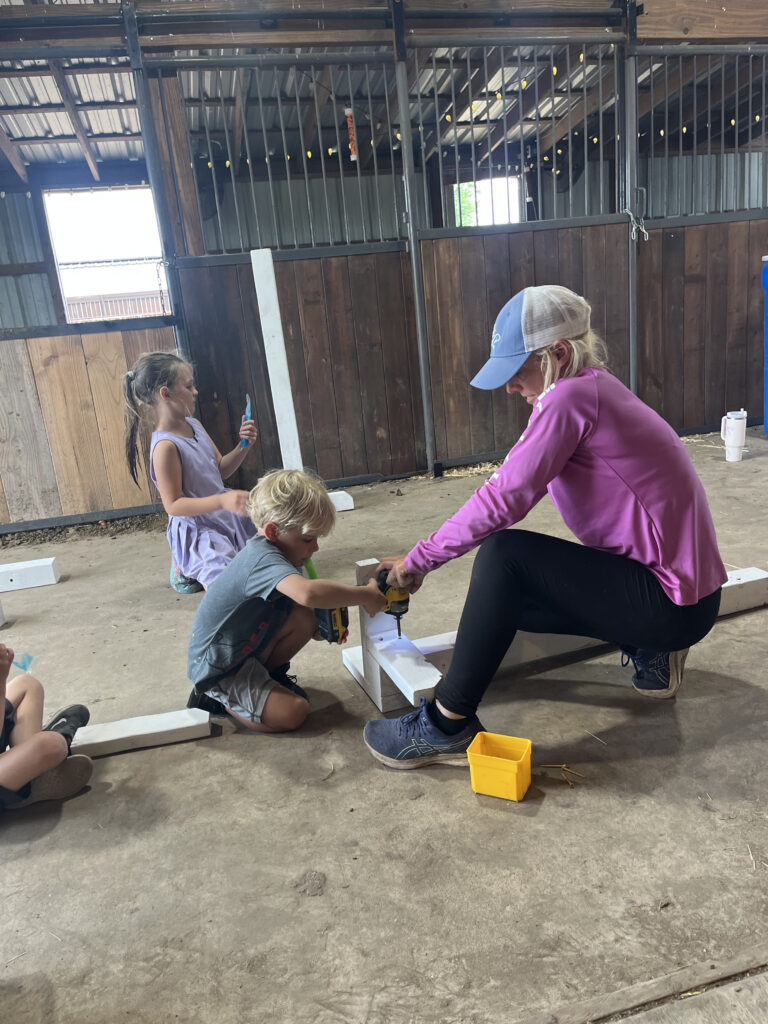
At the farm, someone may learn while walking beside a horse, repairing something, carrying feed, working in a garden, observing animal behavior, talking with another participant, or figuring out how to complete a physical task.
This can create additional entry points for people who learn best through:
- ✓Movement
- ✓Hands-on experience
- ✓Visual information
- ✓Repetition
- ✓Observation
- ✓Practical application
- ✓Social interaction
- ✓Independent exploration
Different ways of learning do not need to be treated as deficits.
Especially Welcoming to Neurodivergent Learners
Many children and adults who participate at Hidden Pastures are neurodivergent or simply learn and engage differently.
They are part of the regular farm community.
Farm Club, Cultivate, Seasonal Farm Camps, adult programs, riding and horsemanship experiences, and other Hidden Pastures programs may all include participants who think, communicate, move, regulate, or process information differently.
Hidden Pastures does not require people to fit one narrow definition of what a learner should look like.
We work to create clear expectations, meaningful participation, movement, practical tasks, and opportunities to engage in different ways.
Not every program will be the right fit for every person, and Hidden Pastures does not provide 1:1 personal care, special education, occupational therapy, psychotherapy, or clinical treatment.
But neurodivergent participants are not automatically limited to a separate program here.
What Farm-Based Learning Is Not
Farm-based learning at Hidden Pastures is not:
- •Psychotherapy
- •Counseling
- •Occupational therapy
- •Sensory-integration therapy
- •Medical treatment
- •Special education
- •A clinical intervention
- •Simply recreational animal time
Some experiences may support wellbeing, confidence, connection, regulation, communication, leadership, and personal growth. Those outcomes develop through participation and experience rather than clinical treatment.

Children and Adults Learn This Way
Farm-based learning is not only for children.
Adults also benefit from opportunities to:
- ✓Learn practical skills
- ✓Move and work physically
- ✓Spend time outdoors
- ✓Care for animals
- ✓Solve problems
- ✓Take responsibility
- ✓Develop competence
- ✓Communicate with others
- ✓Take initiative
- ✓Contribute to meaningful work
The specific activity may look different depending on age and program, but the underlying principles remain the same.
Why a Working Farm?
Because the Farm Is Real
- ✓Animals cannot be cared for later simply because someone does not feel like doing the work.
- ✓Weather changes plans.
- ✓Equipment sometimes breaks.
- ✓A gate left open matters.
- ✓A horse communicates whether an approach is working.
- ✓A garden responds to what people actually do.
Real environments create real feedback.
That gives participants opportunities to adapt, make decisions, practice skills, work with others, and see the consequences of their choices.
The lessons are not manufactured. They are already part of farm life.
Farm-Based Learning at Hidden Pastures
Farm-based learning appears throughout Hidden Pastures rather than belonging to one single program.
You may find these principles within:
- •Youth & Family Programs
- •Horsemanship & Riding Lessons
- •Seasonal Farm Camps
- •Adult Programs & Experiences
- •Private Equine-Assisted Learning & Wellbeing
- •Volunteer Farm Hours
- •Community Events & Workshops
Each experience uses the farm differently, but the underlying philosophy remains consistent:
People learn through movement, relationships, responsibility, exploration, practice, and meaningful participation.
See Farm-Based Learning in Action
Explore the programs, experiences, and opportunities where these principles become part of real farm life.